Monday, August 6, 2012

Where The Buffalo Roam


I recently returned from a family trip to South Dakota, which was wondrous on many levels. We saw vast stretches of prairie and grasslands, witnessed colossal thunderstorms and wildfires, and mingled with antelope, prairie dogs, and grazing cattle. As for the food, we definitely were in the heartland. We ate every possible meat and potato combination, and my children discovered the joy of deep fried cheese curds and fry bread tacos. In fact, the word "fried" describes a large portion of the food we consumed.

But the big revelation for me was bison (commonly called buffalo, but bison is the more precise term). I've eaten bison before, but it is prevalent on menus in that part of the country. I had bison burgers, chili, and tacos, and all were delicious.

The population of bison in the U.S. has gone from near extinction at the end of the 19th century to estimates of 450,000 today, and there are now over 4,000 bison ranchers. Even "farmed" bison are always "free range," left to wander and graze on grass. They consume less food and use less space than cattle do, and therefore have a smaller environmental "footprint." Rising bison numbers means an increased need for grasslands, and some bison ranchers consider grassland preservation to be a twin goal to expanding the bison population. The state and federal governments are also encouraging bison farming, at least in the plains states. Bison are allowed to graze on the Buffalo Gap National Grassland, and I witnessed several groups of bison at Custer State Park, a 71,000 acre South Dakota preserve that is home to more than one thousand of these wandering, gentle animals.

Not only is a rise in the bison population good for the environment, bison meat is lower in calories, fat and cholesterol than beef. And bison can even be a local food choice, with bison farms in nearby Connecticut and Maine offering direct shipping of bison. I also found bison (from South Dakota) at The Meat House in Arlington Heights. Bison meat will cost you, to be sure, but like all other meats, I try to use it sparingly in order to be able to buy quality.

I went with a flank steak, which is a lean cut of beef and even leaner if you are working with bison. The key is a long marinade and a quick cook. Cook straight from the fridge, rather than bring the meat to room temperature before cooking, and that helps prevent overcooking. For a quick weeknight meal, marinate the steak the night before and serve with a chimmichurri sauce, a tangy Argentinian accompaniment for grilled meat.


Grilled Bison Flank Steak with Chimmichurri

For the marinade:

1/4 cup olive oil
1/4 cup red wine vinegar
1/4 cup Worcestershire sauce
1 bison flank steak, 1 to 1 1/2 pounds

Place meat and marinade in a sealed container or bag. Marinate in the fridge for a minimum of one hour, or up to overnight.

Remove from the fridge just before grilling. Shake off excess marinade and grill on direct heat for 3 minutes on a side, until nicely charred, and then move to indirect heat until just pink in the center, or until the meat registers 145 degrees F. Let the meat rest a few minutes before slicing.

Chimmichurri Sauce

1 cup packed cilantro leaves and stems
1 cup packed flat parsley leaves
6 T. extra virgin olive oil
2 T. red wine vinegar
1-2 garlic cloves
A pinch of red pepper flakes or Aleppo pepper
Salt and pepper to taste

While meat is marinating, put chimmichurri ingredients in a blender and blend until smooth. Taste and adjust for seasonings. Spoon over sliced meat.
Thursday, July 12, 2012

Veggies, Veggies Everywhere


The season of fresh and vibrant local produce is upon us, and I have been digging through my recipe files to remember all the ways I love to eat the summer’s bounty. I especially love dishes that don’t involve too much stove or oven time, and I favor treatments that are delicious without needing to be exact about ingredients or measurements. These are some of my favorite summer “recipes,” but feel free to treat them as guidelines and get creative!

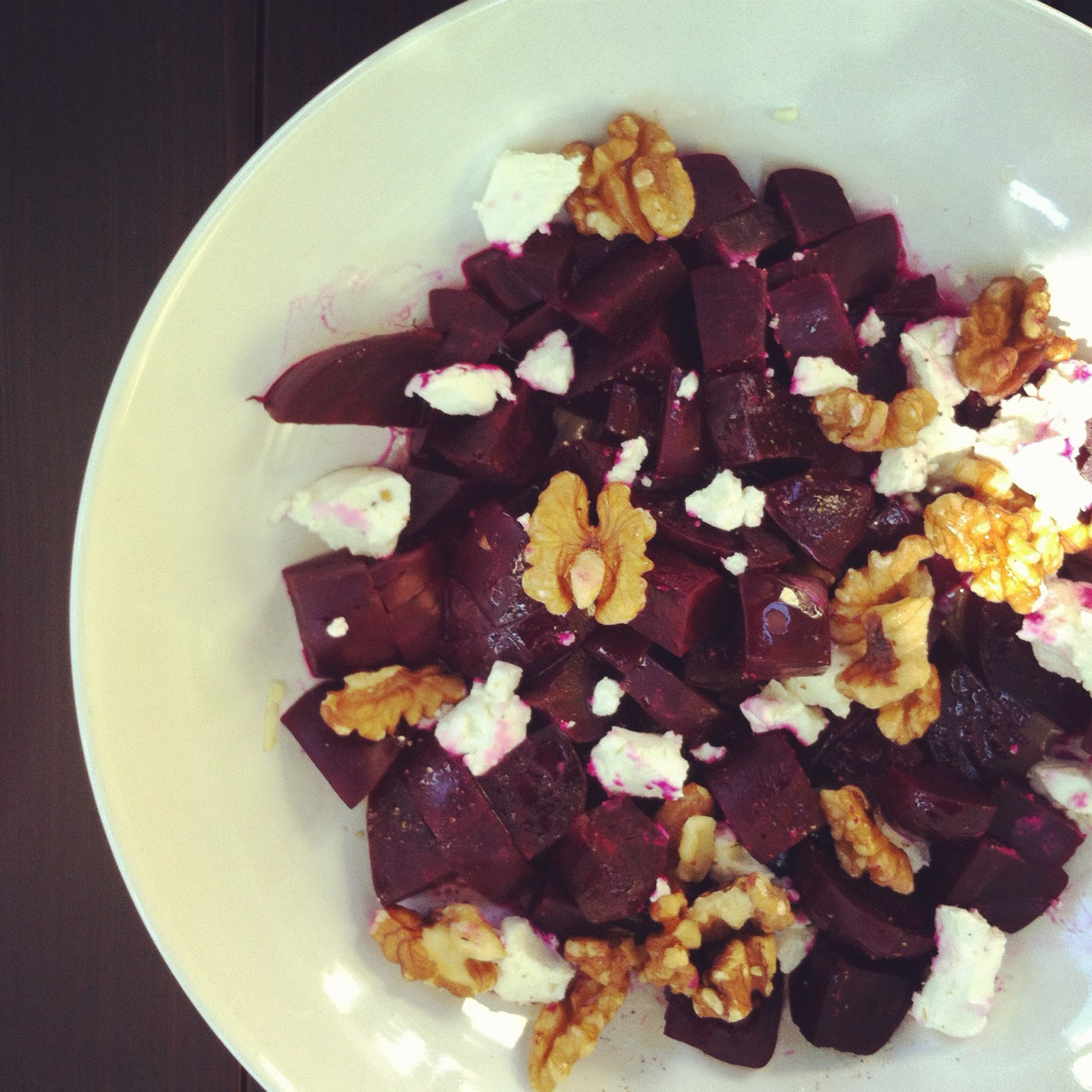
Beet salad

Trim ends off of beets and place in pan with enough cold water to cover the beets. Bring to a hard simmer and cook, covered, until beets are tender, about one hour (this is one exception to the “don’t use the stove too much” rule, but worth it). When a fork easily slides into and out of the beet, they are done. Rinse under cool water, rub skin off, and cut into cubes.

At this point, the beets are ready for anything. My favorite way to serve them is to add crumbled goat cheese and toasted walnuts. Splash on some white wine vinegar and olive oil. Add fresh basil if you have some around. Salt and pepper to taste.


Ribboned zucchini

There are a million different ways to use zucchini and other summer squashes. They are fantastic in bread, on the grill, as a fritter, or in lasagna. A lightning fast no-cook option is this:

Using a vegetable peeler, slice long thin ribbons of zucchini. Place in a bowl and toss with lemon juice, olive oil and salt. Arrange on a plate and, using the peeler again, shave slices of cheese on top. Serve immediately. Use a dry aged cheese like Parmigiano Reggiano or Robusto (an aged Dutch cheese) for best results.


Cucumber avocado soup

Okay, I know avocados aren’t local, but they are essential in my house. I could eat this soup every day in the summer and be a happy camper. The lime keeps the pureed avocados green, so you can make a big batch a day or two ahead.

2 ripe avocados
1 cucumber, peeled and cut into rough chunks
juice of two limes
3/4 c. chicken broth
1 T. sour cream
1 small handful of fresh cilantro leaves and stems
salt and pepper to taste
Place all ingredients in a blender and puree until smooth. Serve garnished with sour cream and cilantro.


Slaw of any kind

There is infinite variety available in the cole slaw category. Cabbage is usually the base, but even within the cabbage family there are options: napa, purple, bok choy. For dressings, you can start with buttermilk, oil, or mayonnaise. Slaw is very forgiving for substitutions and lazy measurements, and each one I make is different. Lately I’ve been focused on Asian flavors. Here’s what I did recently.

For the veggies:
1/2 head green cabbage, thinly sliced
2 carrots, shredded
1/2 cucumber, thinly sliced
1 mango, diced (optional, but delicious if you can find it)
1 bunch scallions, thinly sliced
1 handful fresh cilantro, roughly chopped

For the dressing:
1/3 c. rice vinegar
2-3 T. grated fresh ginger (use a microplane here if you have one)
3 T. sesame oil
3 T. canola oil
salt and pepper to taste
Mix veggies in one bowl, and whisk the dressing in another. About 15 minutes to one hour before serving, dress the veggies.


Monday, June 25, 2012

Liquid Summer Necessities


Summer’s arrival last week was timed perfectly with the heat and energy-sucking humidity. In this weather, I don’t feel like turning on the oven; in fact, I’m convinced my appetite actually decreases. Which is saying a lot for me. But my interest in cold and fruity drinks, alcoholic or otherwise, is definitely on the rise.

Two events have positively affected my beverage life lately. The first is the arrival of strawberry season in Massachusetts. Recently I picked over ten pounds of gorgeous strawberries at Verrill Farm in Concord, and I hope to get back for more before the brief season is over. The second is the arrival of a new cookbook called The Homemade Pantry, 101 Foods You Can Stop Buying and Start Making. It’s an inspiring reference book for making everything from cheese to bread to ketchup.

While leafing through The Homemade Pantry (in an effort to avoid cleaning and hulling the aforementioned pounds of berries), I came across a recipe for berry syrup. Bingo! A path to use lots of berries before they spoil, and to enjoy that unique local berry flavor past the season. Add some of this rosy syrup to seltzer, and you have a great homemade soda. Pour the syrup over French toast, and you will start to wonder why you ever needed maple syrup. And it’s an excellent mixer for cocktails—so far I’ve had it mixed with gin and basil, and limoncello and mint (recipe below), both with excellent results.

Another necessity for summer drinks is simple syrup, which really is simple. It’s a mixture of sugar and water that’s quickly cooked to dissolve the sugar, and therefore is a perfect sweetener for cold drinks that doesn’t have a gritty texture. My son likes to squeeze lemons and mix the juice with a splash of simple syrup to make tart lemonade. And it’s perfect in iced coffee.

One of my favorite hot weather wines is a vinho verde, a dry "green" wine from Portugal that’s slightly bubbly and best served cold. I found three choices recently at Menotomy Beer and Wine, and one of the best aspects of vinho verde is the price — I have yet to find a bottle for more than $9.

With so many choices for staying hydrated, I'm ready for a long, hot summer.

Strawberry Limoncello Crush
makes 1 6 oz. drink

2 oz. limoncello
3 T. strawberry syrup (recipe follows)
4 mint leaves
lime wedge
seltzer

Place syrup, limoncello, mint and lime wedge in a glass. Muddle with a spoon (or muddler if you have one). Add ice and top with seltzer.


Strawberry Syrup
adapted from The Homemade Pantry

2 pounds strawberries, cleaned and stems removed
4 cups water
juice of 2 lemons
½ cup sugar
pinch of salt

Place strawberries and water in a saucepan. Bring to a boil, lower to a simmer, and cook until the strawberries are soft, about 10 minutes. Remove from the heat and blend the mixture until smooth (using an immersion blender or, alternately, by placing the liquid in a stand blender and, after letting cool a bit, pulsing until smooth). Using a fine mesh strainer, strain the syrup into a clean pot. Add lemon juice, sugar, and salt. Bring back to a boil, lower the heat, and simmer until the syrup is thick enough to coat the back of a spoon. Taste for sugar and add more if needed. Allow to cool.
Keep refrigerated (will last about 2 weeks; can also be frozen).

Simple Syrup

Mix 2 cups sugar and 2 cups water in a saucepan. Bring to a boil, and boil for 2 minutes. Allow to cool. Keep refrigerated (will last indefinitely).